“The strength of a team is each individual member. The strength of each member is the team.” ~ Phil Jackson
This is what Nick discovered when tragedy hit, just months before he was due to summit North Africa’s highest peak…
Here, he shares his experience:
Toubkal? Doubtful now….
Friday 26th April 2024, I set off to cycle to work as I had all week. I remember turning left on Cavendish Road, I wasn’t early, or late.
According to my phone, I regained consciousness on Sunday 28th April and found myself on L10.
I was told that I was found unconscious in the road by a pedestrian who flagged down a passing ambulance. Scary thoughts…
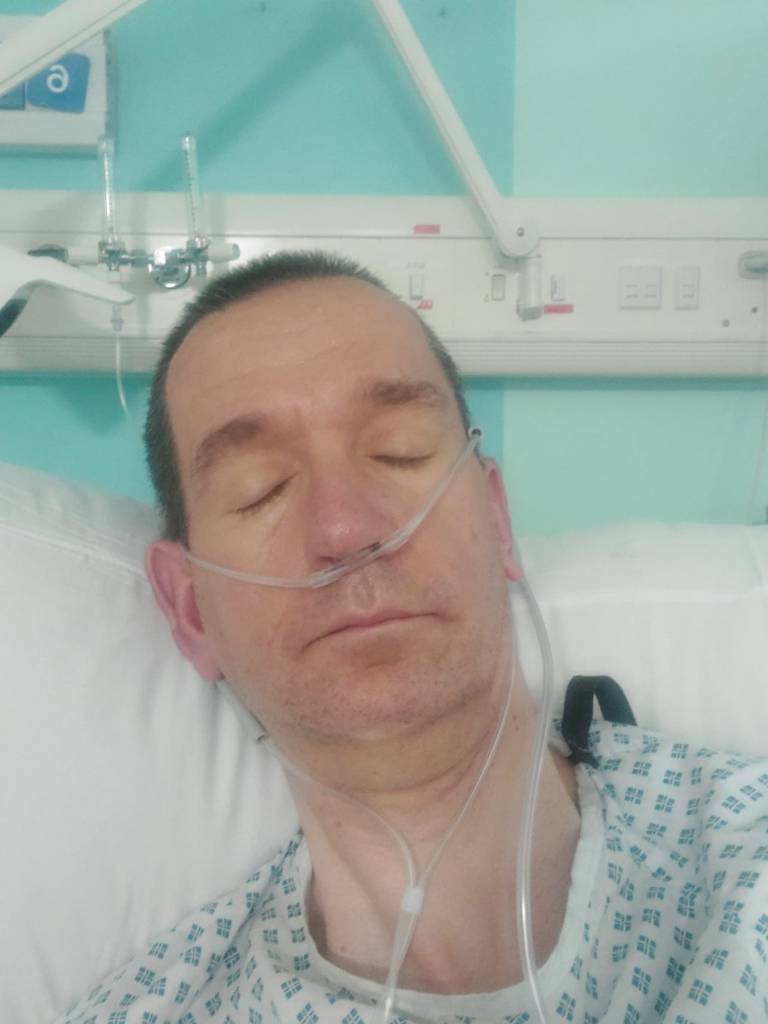
Various scenarios have been suggested as to what occurred. As an Acoustic Neuroma (AN) brain tumour survivor, with half my vestibular system non-functioning, I am always aware that my body might fail me. In this instance, my injuries tell a different tale, as does my bike computer and my clothing.
Seven broken ribs, a punctured lung and ‘a trace’ of ventricular haemorrhage (bleed on the brain).
When I was told of my injuries I cried, out of my right eye as my left one has been unable to cry since AN excision.
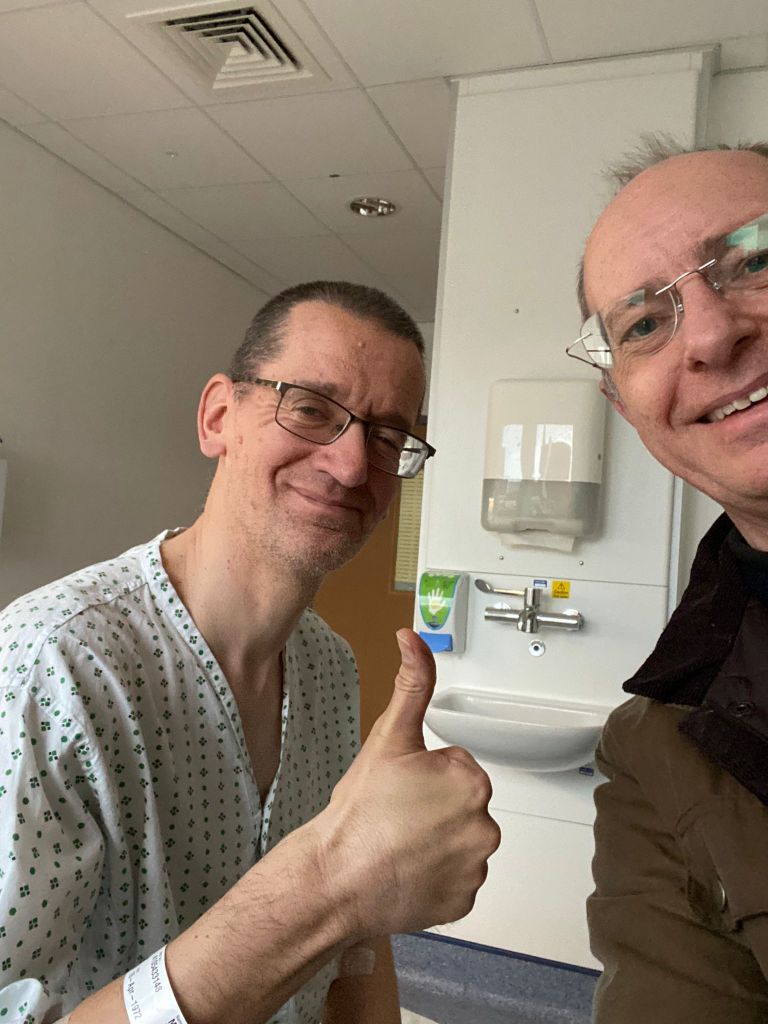
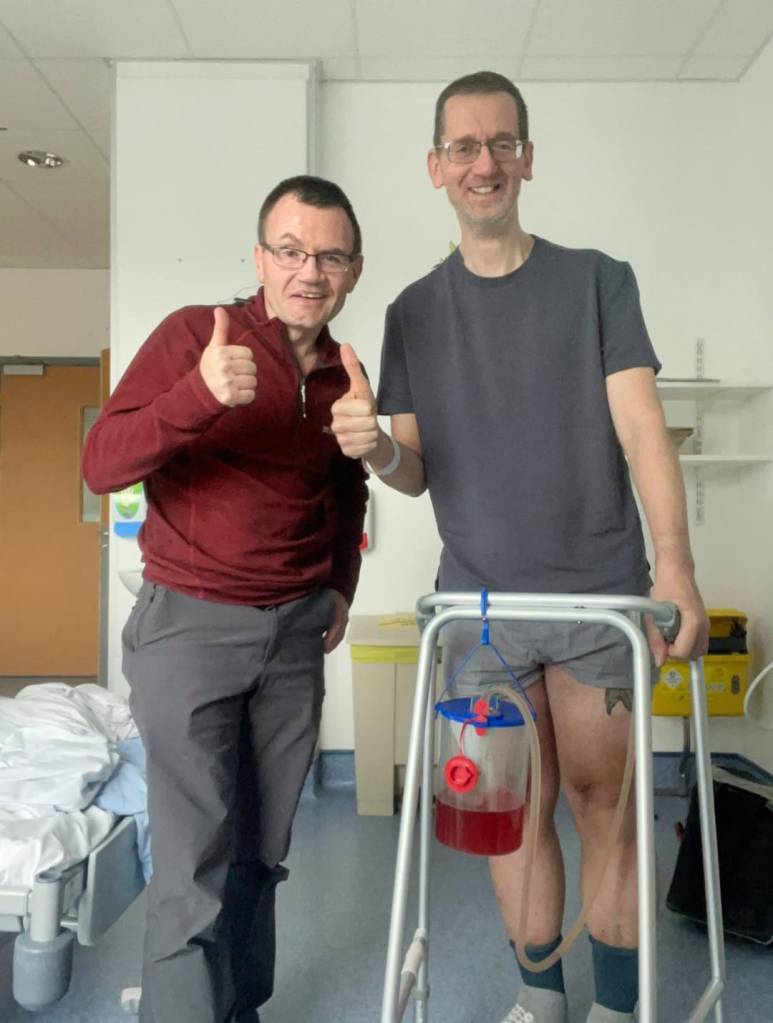
I was due annual leave for a week starting 29th April. The plan was to take the train up to Scotland to backpack the Speyside Way as a toughener for Morocco.
I had been honoured to be invited with a team of brain tumour survivors to climb Mount Toubkal, which at 4,167m this is North Africa’s highest peak. I had trained diligently, walking every weekend often with Friends of Settle Carlisle line (FoSCL) walking group, but solo too, to strengthen my walking legs; cycling might build fitness but walking requires physical stamina.
Having been advised to walk with a 10kg rucksack, I was inspired by Constance at work who was going camping for the weekend. Backpacking would need my largest rucksack and I wanted to keep using my trekking pack for consistency. So I came up with the idea of a weekend overnight trip (22nd to 23rd March) to Greg’s Hut.
I had passed this hut on my 1995 Pennine Way trip. I walked from Appleby station to Dufton, then the Pennine Way until Cross Fell, followed by a cold night with snow and a corresponding tough descent to Langwathby for a warm train home.
My intention was to be a strong team member so I could help and encourage our team. It turns out I ended up being the weakest team member, full of doubt and pain on every breath, despite my painkillers.
On 9th May, I was discharged home. My dream of my own bed was ruined by the realisation that, unlike in hospital, my bed didn’t adjust and lying flat left me prone to rolling on to my left side with its broken ribcage. I slept sat upright on my sofa.
My consultant had said he would sign me off to fly to Morocco but the ascent was up to how I felt…
I was told not to exercise for a month after my chest drain was removed (8th May) so with my consultant’s flight approval in my head, I went on a FoSCL walk on 8th June; despite all the training I had put in prior to my RTC, it was hard.
I stopped for my bladder, and could barely catch up. I spent all day trying to maintain their pace and took an extra dose of painkillers as my ‘reward’ for reaching Settle station and the train home. After sleeping my way home, I was certain my Toubkal quest was unrealistic.
I have to say at no time did my team refuse to take me. I had completed 2 training weekends in Snowdonia and we had Gwyn, our very own Mountain Rescue/Advanced Paramedic Practitioner, along with support crew Paul, Aimee and Daniel, in addition to our local guides.
On 15th June, I forsook the FoSCL walk, in order to hike solo to test myself and have greater control over the distance covered. I went to Horton-in-Ribblesdale for Pen-y-Ghent, the 1st of Yorkshire’s 3 peaks and an old friend of a mountain…. I made it! Ok, it took one and a half hours, whereas one hour is my standard time, but the walk down to the well-earned café stop was full of hope.
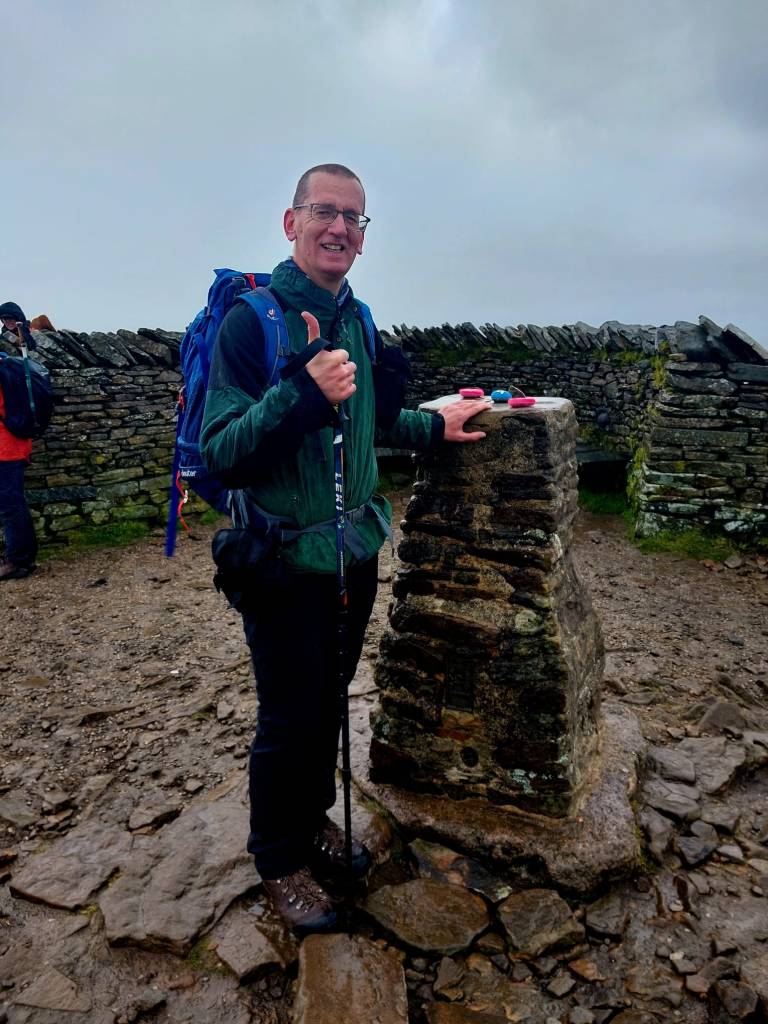
On 20th June, I set off to walk down for the bus to Apperley Bridge train station. My trekking rucksack was in my kit bag that had a shoulder strap – I threw it over my right shoulder but the weight shifted my ribcage and the pain shot up my left chest wall. I dropped my kit bag, took a few deep breaths and questioned what I was doing. As an AN survivor I have been through a lot, I picked up my kitbag, carrying it like a baby, and waddled down to the bus stop.
The train journey to Manchester Airport was traumatic with cancelled trains, an extra change at Manchester Oxford Road and the out of use travelator. Eventually, I made it to await our team coming from all over the UK. Phil arrived first and found me.
I felt like a fraud because I expected to get to base camp and be medically withdrawn, I had already resigned myself to this fate.
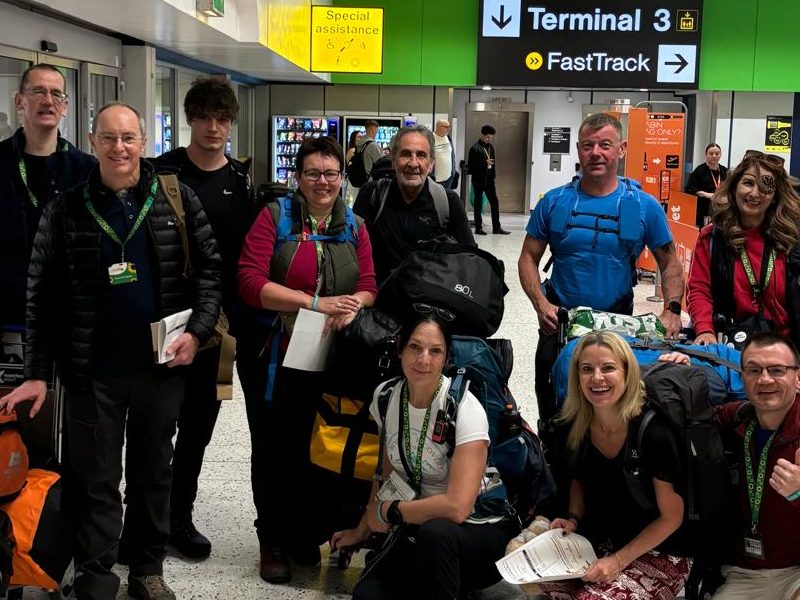
After a restless night, our team appeared in the morning and I tried not to look like I was surviving on 4 hourly painkillers (I was). I was trying to act fit and well when my sun cream was confiscated going through security! It was a relief to have something to distract me. I was more concerned by not having water to take my next painkillers! Thankfully the airport Starbucks refilled my bottle.
The flight was ok. Sat upright, I managed to sleep without dribbling!
The minibus ride out from Marrakech was great, as our team was all together. I felt safe having the support of each member. We arrived at the roadside drop off and walked to our village accommodation… I had a mixture of apprehension, excitement and companionship.
We were made to feel welcome, and I ate for pleasure rather than just to give my painkillers a soup to work from.
On 22nd June we set off, resplendent in our clean kit, to begin the trek up to base camp. I expected this to be my swan song and so tried to enjoy the day. We arrived together but my breathing was difficult, as well as painful. Sara gave a team talk about being able to ascend the next day. I was still waiting to be deselected.
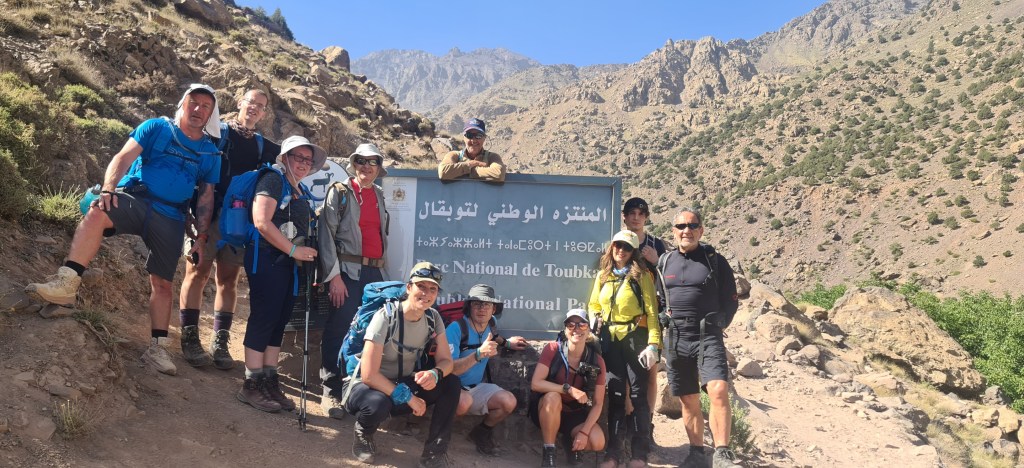
I went to bed thinking I wouldn’t sleep, but did. I awoke (at altitude) and my breathing seemed better, but I was still holding back the tears wondering when I would be stood down. However, Sara had no intention of leaving anyone behind unnecessarily, and had many back up plans in place, just in case.
It’s easy to complain, yet we have all survived so much; that first walk after surgery and bed rest. Not just my body but everyone in our group has survived so much and we still wonder, “Is that possible?” Our entire team has had to face the new normal after surgery and/or treatments that in themselves are debilitating.
On 23rd June, our entire group set off. Wow! I was still on the team…
There were a few handholds on rock before the stony route continued. Together, as a group, we ascended. I tried, oh how I tried, but I asked for more rest stops than anyone else. My legs were ok, but my breathing was ragged at altitude and painful with every breath.
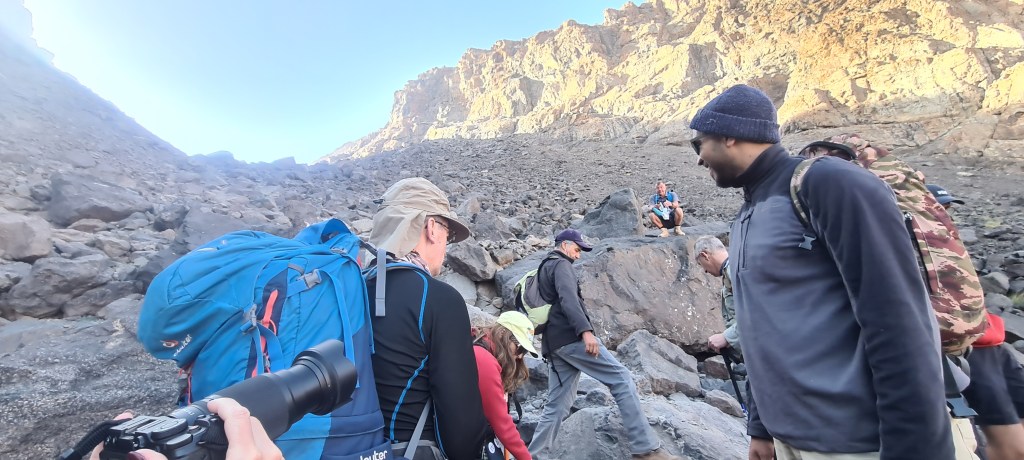
Just before the summit, one of our guides swapped rucksacks with me. I was a bit put out by this, but in reality I needed every assistance to reach the summit. I had spent the whole climb trying not to be a burden and looked back down our route wondering who would be sent back with me.
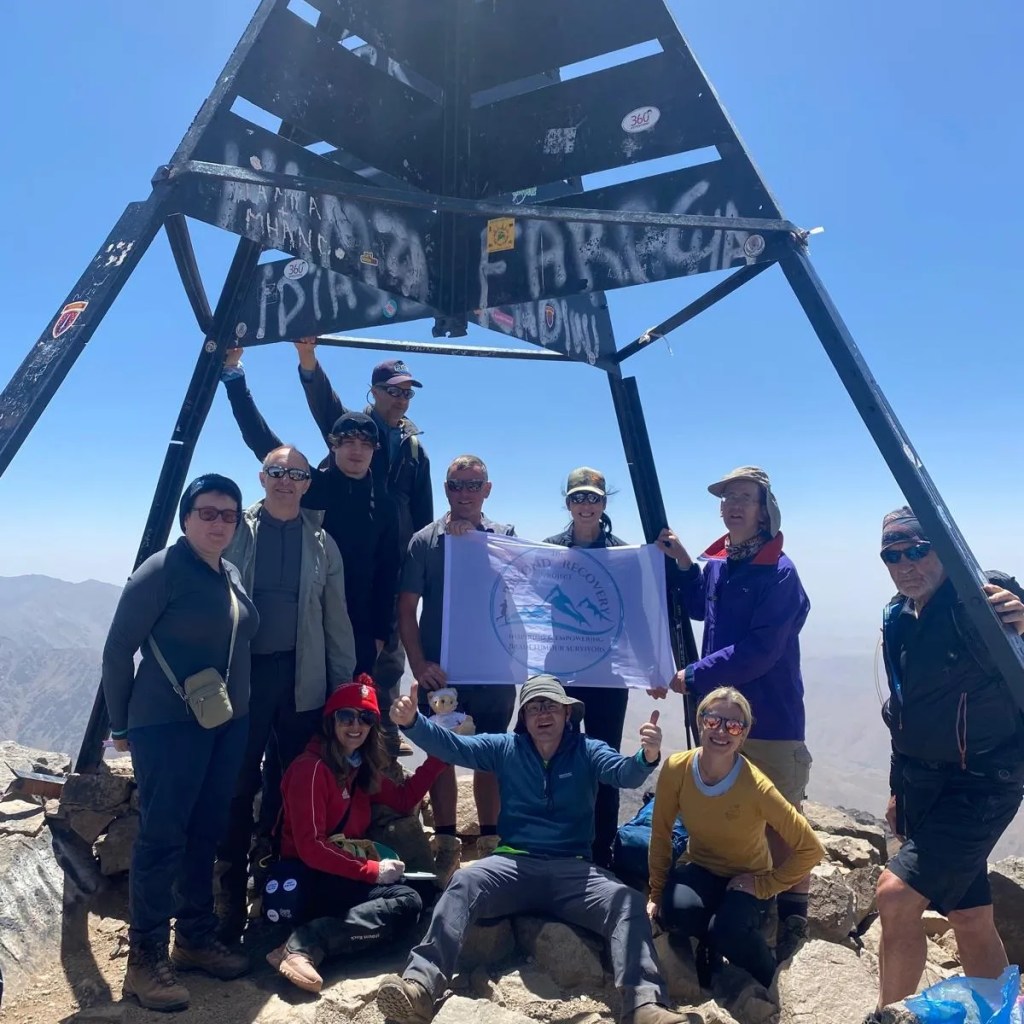
Summiting came as a shock. I was amazed and grateful for the team who had supported me on the ascent, even Paul who had been singing (badly) little donkey…
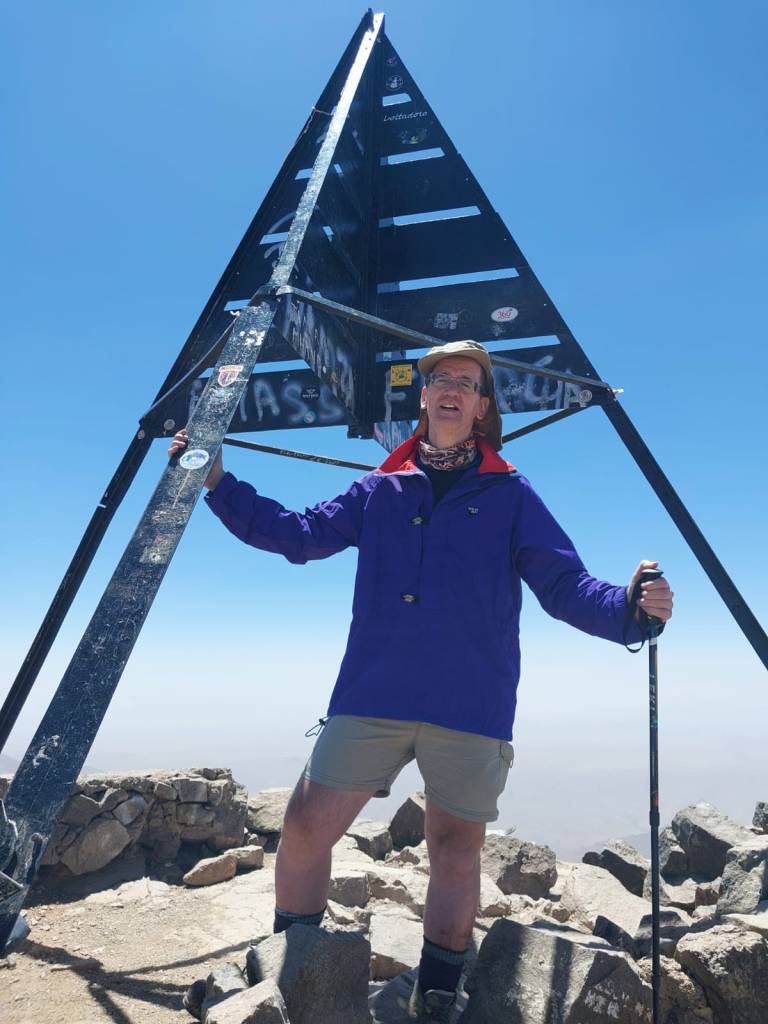
Lahcen, one of our guides, ran me down the scree slopes on the descent. I just leaned into him and trusted that he knew the safe routes. I still asked for various stops on the way down. Lahcen was instrumental in getting me back to base camp safely. I felt lost without my team but at least I wasn’t slowing them down anymore.
We weren’t the first down though, that was Israr, who had also had to overcome significant challenges to reach the summit. Since her surgery for a life-threatening Petroclival Meningioma, she has also had to relearn to walk, has severely impaired vision, and is now hypoxic at sea-level, so she too had needed to stop frequently for supplemental oxygen.

Summiting was unexpected. I think I was a bit in shock for the rest of the day, but so grateful to the entire team.
~Nick Marston, Team Toubkal 2024
The Beyond Recovery Project relies entirely on the generosity and support of our donors. Your contributions make it possible for us to transform lives and empower individuals on their journeys to recovery and beyond. Every donation, no matter the size, helps us continue to provide vital services, support, and experiences like this to those who need it most. Thank you for making a difference and helping us change lives for the better.
You can donate here.
 The Beyond Recovery Project CIC