Shortly after the birth of my son Zachary, I was diagnosed with a brain tumour called an Acoustic Neuroma. Also known as a Vestibular Schwannoma, this low grade, non-malignant tumour grows on the eighth cranial nerve, responsible for your hearing and balance.
Symptoms can include hearing loss, tinnitus, balance problems, facial numbness, headaches, ear pain, difficulty swallowing, voice changes and visual disturbances.
Despite my tumour being benign, the size and location of it meant it was compressing my brain stem; it needed to be removed else it could be fatal. These tumours are in such close proximity to your facial nerve (7th cranial nerve) that removing them can be extremely complex; causing damage to this nerve often leaves people with severe long term facial palsy and difficulty eating and swallowing.
I had my 10 hour brain tumour surgery in March 2024 and was expected to be in Salford Royal hospital for 5 days. Unfortunately I developed a cerebral spinal fluid (CSF) leak and meningitis which was then followed by a reaction to the antibiotics trying to save me, but at least I have an epic scar to show for it.
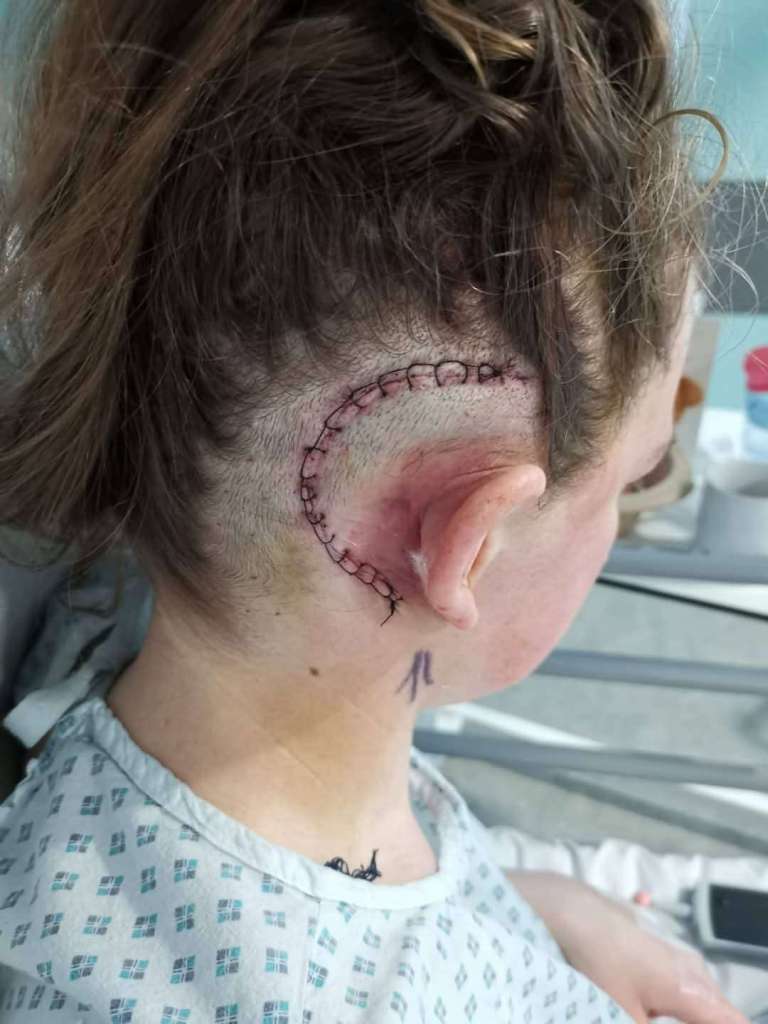
These complications meant I was in hospital nearly a month; I have no recollection of the middle weeks when I was so out of it with the meningitis. Being away from my family was tough and I was worried Zachary wouldn’t remember me.
Zachary took his first steps the day before I went into hospital. I’m sure he knew how important it was to me not to miss this. After my surgery, it was me who had to learn how to walk and balance.
Several weeks after returning home I couldn’t even manage to walk to the end of my street. Due to my CSF leak and ensuing complications, I wasn’t allowed to lift, carry or elevate my heart rate until 4 months post op; that meant not lifting Zachary for all that time.
With the surgeons having to sever my vestibulocochlear nerve, I am now completely deaf in my right ear (known as single sided deafness or unilateral hearing loss) and have permanent balance issues. I also suffer with neurofatigue, physical fatigue, facial numbness, facial twitches, tinnitus, neuralgia, visual problems and issues with my sense of taste.
I am still learning to adapt to my new life and my new normal. Unfortunately all of my tumour couldn’t be removed, else I would have been left with severe facial palsy. I now have regular MRI scans to monitor this, and will need radiotherapy if the tumour starts to grow again.
Neurofatigue also known as mental fatigue is a hidden disability misunderstood by many. It is very different from physical fatigue. Neurofatigue is a decrease in concentration, focus, memory, recall, and word retrieval. This fatigue or tiredness is not the same as exhaustion due to physical exertion, insufficient sleep, or overworking. It is common in those with brain injuries.
I’ve been told, “You look fine now,” “There’s nothing wrong with you,” and my personal favourite, “There’s lots of people who don’t have brain tumours that can’t walk as far as you.”
Well yes, that is probably true, that the mile I can walk now may be more than lots of people. But when you were doing a 10 mile hike up a mountain to be then only able to walk 1 mile, that is very different.
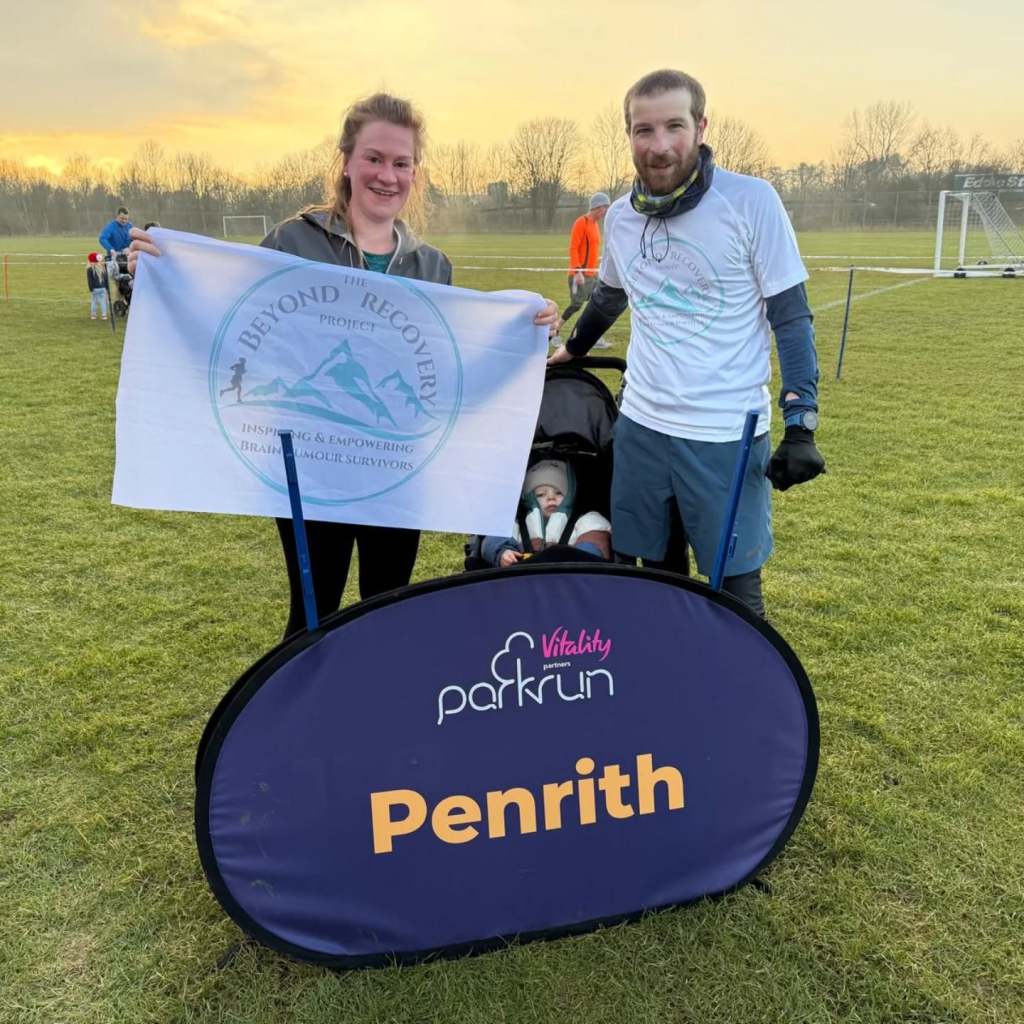
I was a very active person prior to my surgery; people have no idea that the Parkrun or walk I did at the weekend floored me, and resulted in me not leaving the house for 2 days. People only see my good days. The lack of ability to exercise physically has also had a massive impact on my mental health.
“…neurofatigue really is misunderstood.”
Even some family members don’t get it. A recent comment at a family meal, in a noisy restaurant, about me being “Rude because you left early,” struck home how neurofatigue really is misunderstood.
They don’t seem to understand that had I not left early (and we’re only talking 8pm here) and I certainly didn’t want to, I would have been in bed until 2 o’clock the following afternoon and missed out on taking my son to the park.
People don’t understand that I have to plan my life weeks ahead, so I can have rest days. And those rest days can be after something as simple as meeting a friend for lunch – not running a marathon. I’m currently finding neurofatigue much much worse than the physical fatigue.
My single sided deafness (SSD) does not help this neurofatigue one bit. When someone can hear well, with both ears, their brain is able to filter out unwanted background noise and concentrate only on what they want to listen to.
With SSD, I struggle with hearing sounds or speech on the side with the deafness, because the head naturally blocks soundwaves from that side making it harder to hear for the ear with a normal level of hearing (this is called the ‘head shadow effect‘). I can’t identify what’s causing the sound or the direction it’s coming from or judging how far away the source of sound is. I can’t understand speech when there is background noise such as a tap running or a radio playing, because my good ear homes in on that noise and ignores the person speaking to me.
I’ve often been told, “But you’ve got one good ear”. They don’t understand the level of fatigue SSD causes, or how embarrassing it is to inadvertently ignore someone, or having to ask again and again for someone to repeat themselves.
Unfortunately, because my cochlear nerve had to be cut during the operation it means any hearing aids can only direct sound to the good ear, so it doesn’t help with processing sounds and the fatigue it causes.
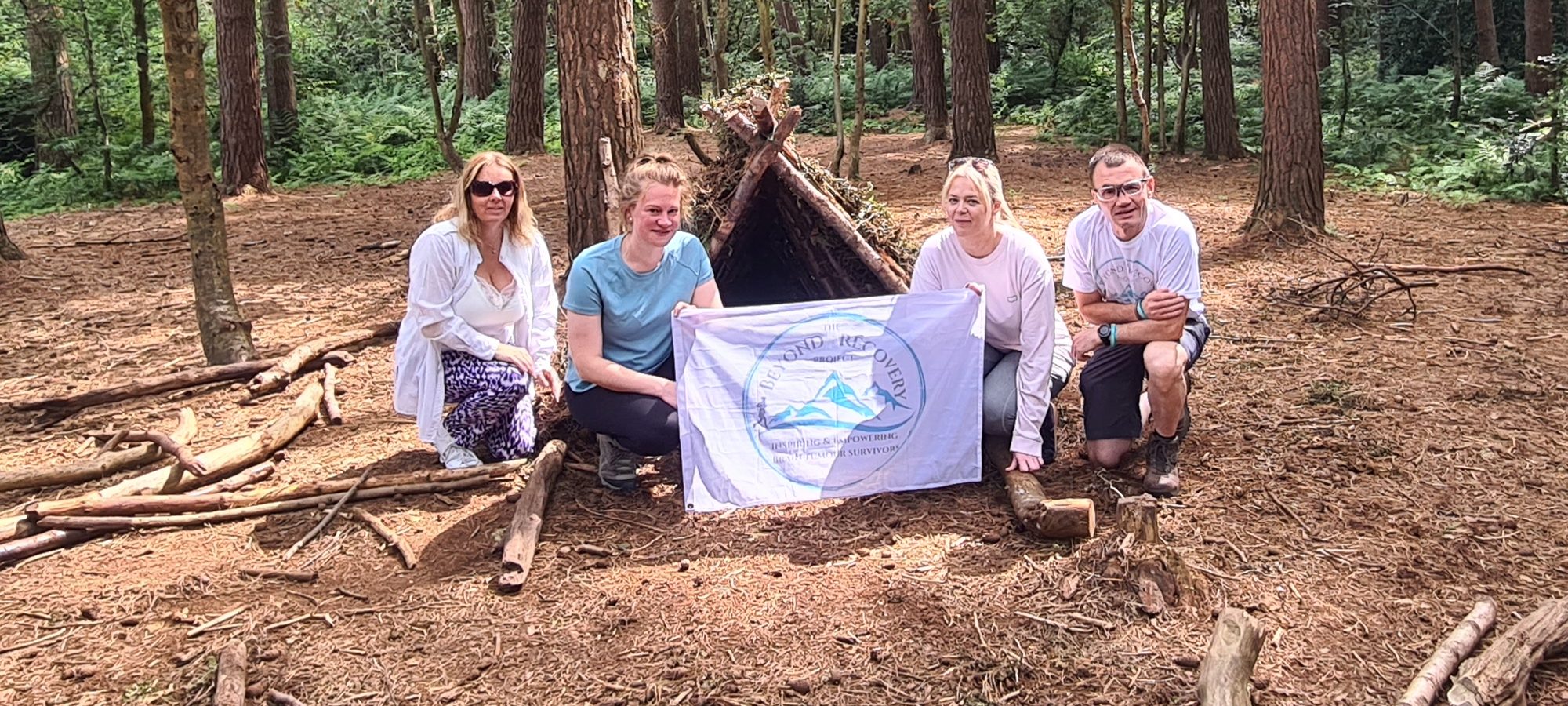
The Beyond Recovery Project has been a life saver. This organisation provided support before, during and after my surgery. When I was in hospital, it struck me that I might not be ever able to do the things I love to do again, such as mountain hikes or exploring the great outdoors. I cried at the fact that I may never be able to complete my bucket list, Tough Mudder being on that list.
“If other brain tumour survivors can do it, so can I.”
The Beyond Recovery Project empowers and inspires brain tumour survivors. So when Sara, who started the organisation, messaged asking if I’d be up for the Sahara 2025 challenge I jumped at the opportunity. I mean I had already said yes before I knew the challenge would entail a 100Km trek over 5 days in sand dunes. I thought to myself, “If other brain tumour survivors can do it, so can I.”
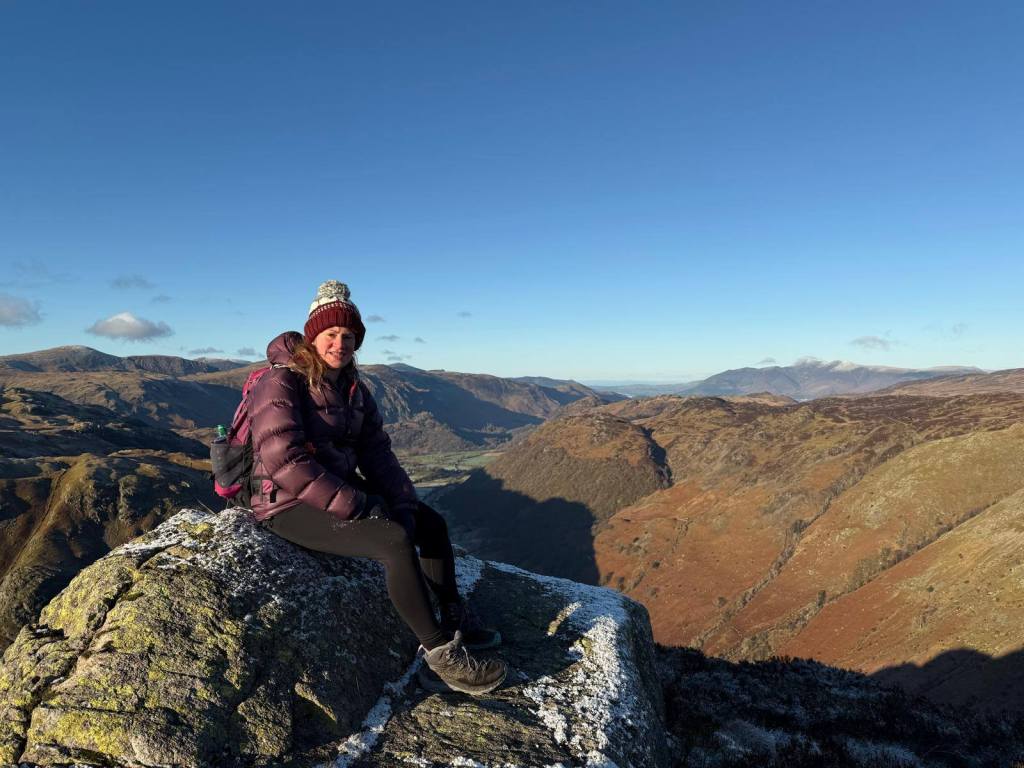
This is exactly what I needed to give me a sense of purpose and a goal to aim towards. I wouldn’t be where I am today and have the motivation to keep going if it hadn’t been for some of the amazing people I have met through this organisation. As I like to say, “I’m not in a box yet!”
On 26th July I am taking on the Tough Mudder 15K challenge to raise money for The Beyond Recovery Project. I’ve also signed my better half Ross up for the challenge (there was a 2 for 1 Black Friday deal so it seemed a shame not to use it!)
Before my brain tumour diagnosis, I would have given every excuse under the sun as to why I kept putting Tough Mudder off. I mean, I currently can’t run more than a mile in one go, but now my mindset is different and I’m ready to work towards the challenge. If other people can do it, why can’t I? Any donations, however small will help this organisation continue to support and motivate brain tumour survivors.
By Becky Holden
In November 2025, Becky will be joining us on our 100km Sahara trek, to push the limits of her new normal. Please show your support by making a donation.
 The Beyond Recovery Project CIC