Beyond Brian and Recovery
Our individual brain tumour journeys are not only about our physical recovery, but also regaining our mental balance, wellbeing and self-confidence – as well as adjusting to our new normal daily. Here’s Amanda’s story…
“In November 2017, when I was 50, I was diagnosed with a 25mm Acoustic Neuroma pressing on my brainstem. I named it “Brian”. He was on the left-hand side of my brain. On reflection before my diagnosis, I knew something was not right, with loss of hearing on my left hand side and ad hoc shooting pains behind my left ear along with headaches, fatigue, and tinnitus.
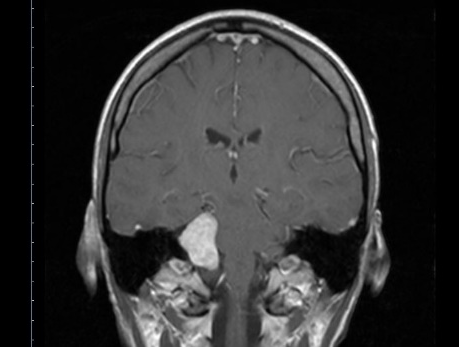
My immediate reaction on discovering I had a brain tumour, which due to its size and location meant that surgery was my only option, was denial and anger, as I had only recovered from surgery and radiation treatment for thyroid cancer ten years previously.
Hearing the consultant’s verdict and seeing the 3D scan image of ‘Brian’ my benign brain tumour, along with being told about the surgery involved to remove it and the possible complications, was terrifying and made me incredibly anxious as there were so many unknowns.
Initially I retreated into myself, as found it difficult to come to terms with what I was dealing with and the implications for myself and my family. However, my experience of dealing with my thyroid cancer a decade previously, gave me the armour to set out on my Acoustic Neuroma journey. So there I was, glass half full, Carpe Diem mental attitude and a whole lot of hope and faith.
‘Brian’, my brain tumour, was 100% successfully removed from the left hand side of my brain under the expertise of the skull base medical team following a 10-hour operation at Addenbrookes Hospital, Cambridge, in early March 2018.
Miraculously, they managed to unwrap my facial nerve from around ‘Brian’ and minimised the facial palsy on the left hand side of my face. My physiotherapy sessions went so well that I only spent three nights in hospital; the ENT and physiotherapist reckoned that due to doing balance related sports and exercises my vestibular system had already adjusted over the last decade, during which they believe Brian had been growing quietly in my brain.
However, whilst my recovery journey had only just begun, it soon came to an abrupt halt when 10 days after discharge I suspected I had a CSF (Cerebrospinal Fluid) leak. Following a check-up and emergency CT scan, it was confirmed by my neurosurgeon, and I was readmitted into Addenbrookes Skull Base ward on 26th March. I was put on a lumber drain for ten days. There is only a 5% risk of developing this post-surgery and it was at this point I hit an all-time low with the return of the facial palsy, as well as feeling afflicted and alone on this journey. During this time, I also developed meningitis. I couldn’t even cry properly as my left eye duct was still not fully operational.
My turning point was when a teenage girl came on the ward; she had a rare genetic brain tumour growth condition and chatting to her mum I found out she had already had a number of brain tumour operations and she was now having an Acoustic Neuroma removed, which meant she would be 100% deaf post op. This was a wake up call to stop feeling sorry for myself and to start putting a positive spin on matters. I still had Single Sided Hearing (SSH) and a full recovery to my new normal lay ahead of me.
“It wasn’t an easy road to recovery.”
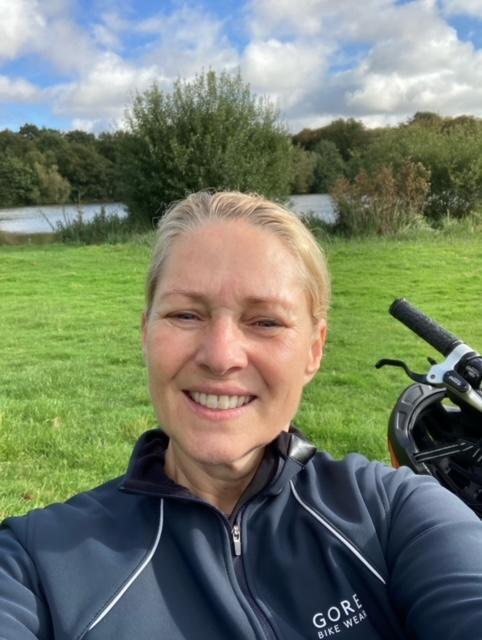
It wasn’t an easy road to recovery; adjusting to and coming to terms with Single Sided Deafness (SSD) on my left side, as well as my “new normal” was a challenge. I mentally and psychologically hit a brick wall at around seven months post-surgery, when the enormity of what I had been through dawned on me. I struggled to find the help I needed to see me through this dark period, but I am naturally a positive person and managed to get myself through this.
Before my Acoustic Neuroma I was very sociable, but now I am selective about what I do. I wear a CROS (Contra Lateral Routing of Signal) hearing aid. However, this is not ideal if I am in an environment with a lot of background noise, as I struggle to zone in on a conversation and suffer from fatigue after being in a busy and noisy environment.
I have tried not to let my Acoustic Neuroma define me, and thankfully the support of family and friends has helped me along on my journey. Post recovery though, family and friends only see the tip of the iceberg; they think you look and are fine, however they just don’t see what you are dealing with underneath on a daily basis: hearing issues, facial weakness, tinnitus, cognitive issues, eye issues, balance issues, sensitivity to sound, fatigue, anxiety, self-confidence and more…
One motivational WhatsApp message from a friend stands out from my recovery. It read, “The journey to the top of the mountain is worth the climb to see the view from the summit.”
I feel that my experience, and that of others, highlights the importance of the ethos of ‘The Beyond Recovery Project CIC’ to inspire and empower brain tumour survivors by bringing together others on the same or similar journey, to create a ‘safe’ space and sense of community, where survivors can share experiences and discover how to push beyond the physical and psychological barriers they face together.”
The Beyond Recovery Project is a not-for-profit community interest company which supports brain tumour survivors like Amanda.
It is funded entirely by donations and run by volunteers. Please support if you can, so that we can continue to provide this support to the brain tumour community.
 The Beyond Recovery Project CIC